Note · Pools
How a 38/4 pair works: warm, cold, rest, and the plant behind them
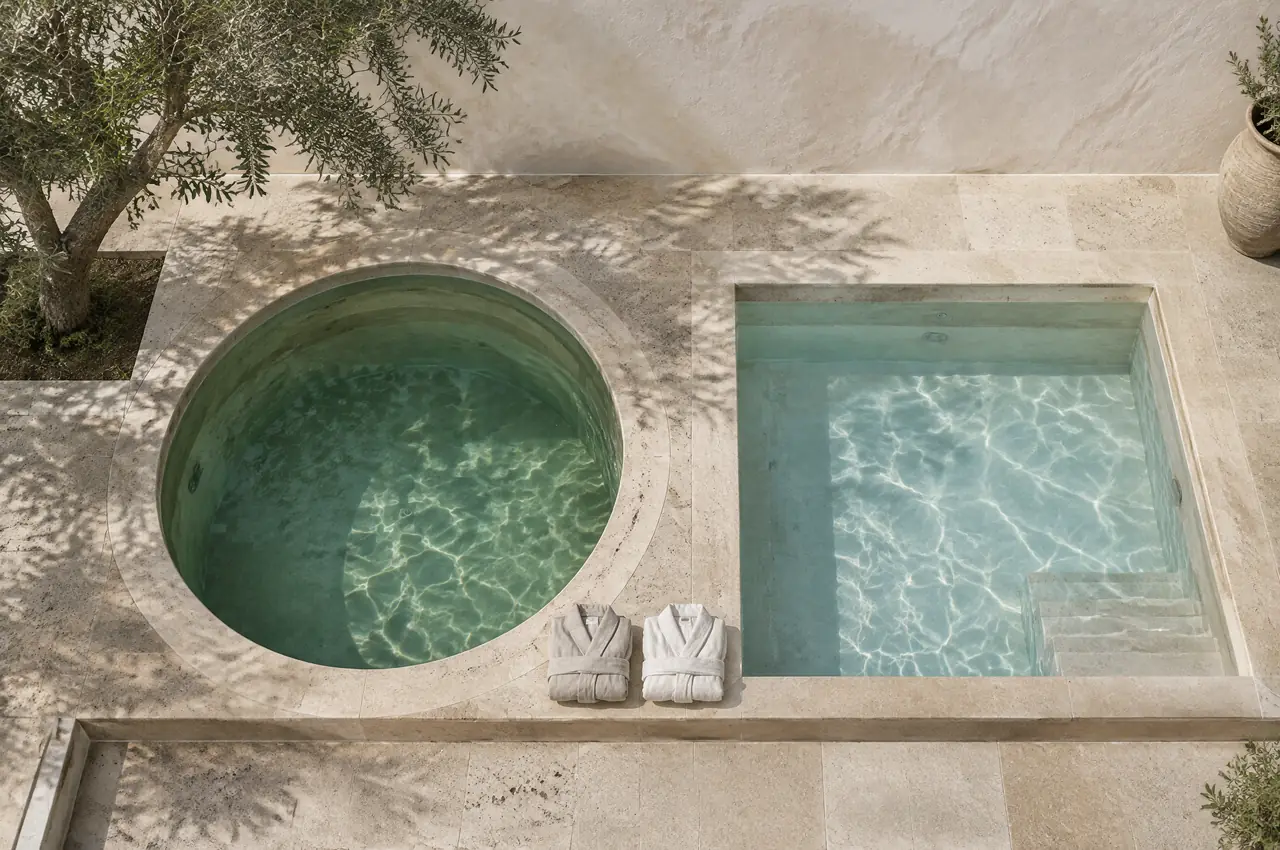
A hot-and-cold pair is two small pools, two temperatures and one routine. This note sets out the routine, the hardware that makes it possible, the arithmetic of heating a pool and the limits of what any of it can promise.
Sections on this page
- The routine, without the mythology
- Two circuits, one plant room
- The arithmetic of heating a pool
- Why the cover matters more than the heater
- One session, minute by minute
- Seasonal tweaks an owner can make
- Teaching a guest in four lines
- Safety, in plain words
- When it goes wrong: three faults and what they mean
- Where a pair earns its place
Short version: you sit in warm water, step into very cold water, rest, and do it again, for as long as you choose. Nothing about it is secret, and nothing about it is medicine. What is worth knowing is how the two pools are made to hold their temperatures, because that is where good and bad installations part company.
The routine, without the mythology
The pattern is Nordic and very old: warm, cold, rest. How long anyone stays, and how often they repeat, is their own decision and, in a hotel or club, the operator's rule; we draw the pools, not the protocol. The one line we write on every card is that you can get out whenever you want to.
Two circuits, one plant room
The pools sit side by side, but behind them there are two separate systems. The warm pool has a heater and a circulation pump. The cold pool has a chiller and its own pump. Each has its own filtration, because water at 38 °C and water at 4 °C behave very differently: the warm one grows biofilm if you let it, the cold one barely does. Putting both in one plant room means one set of access doors, one drain, one electrical board and one set of instructions.
The arithmetic of heating a pool
Take a warm pool of 1,800 litres filled from a garden hose at 15 °C. Raising it to 38 °C means adding 23 K of temperature to 1,800 kg of water: 1,800 × 4.19 kJ per kg per kelvin × 23 K, about 173 MJ or 48 kWh. A 6 kW heater needs eight hours to do that, without counting the heat the pool loses to the air meanwhile. So a warm pool is not heated for the guest who arrives at seven; it is held at temperature under a cover, and the first heating of the season is an overnight job. The cold side behaves the same way in reverse: its first pull-down is overnight, and after that it only has to hold.
Why the cover matters more than the heater
Heat leaves a warm pool through the surface, mostly by evaporation and radiation, and a lid or a sliding timber deck cuts that loss sharply. On the cold side, the cover does the opposite job and keeps the sun from warming the water. A pair without covers is a pair with an electricity bill.
One session, minute by minute
The times are an example of what the plant does while a body goes through the sequence. They are not a prescription.
| Minute | The guest | The plant |
|---|---|---|
| 0–10 | soaks in the 38 °C pool, shoulders under | the heater cycles to hold the setpoint; the pump circulates |
| 10 | steps out, rinses, walks three paces | nothing changes: both pools hold their temperatures |
| 10–12 | enters the cold pool by the steps | the chiller starts as the water warms from the body |
| 12–22 | rests in a robe; may go back to the warm pool | the chiller pulls the cold pool back to 4 °C |
| 22 onward | repeats or stops | covers go on when the last guest leaves |
Notice what the plant does: nothing dramatic. It holds. A well-sized pair is almost silent between sessions, and the water that took an overnight pull-down on the first fill recovers in minutes because the load is only a body and a few hundred watts of sun.
Seasonal tweaks an owner can make
An owner can lower the warm setpoint by a couple of degrees in summer, or raise the cold one by a degree or two for guests who prefer a gentler start. The controller allows both, and the card at the pool says what the display should read. We set the defaults at 38 and 4 and tell you where to change them.
Teaching a guest in four lines
- Shower or rinse before you get in; the warm pool is shared.
- Warm first, as long as you like, and leave if you feel dizzy.
- Cold for as long as is comfortable, then out by the steps, never by diving.
- Rest in a robe before you go round again.
We write those four lines, in your language and your tone, for the card at the pool.
Safety, in plain words
- Going from warm water to very cold water is not for everyone. Anyone with a heart or blood-pressure condition, anyone who is pregnant and anyone who is unwell should ask a doctor before using the pools, and nobody should use them after drinking alcohol.
- Nobody should use the cold pool alone for the first time, and nobody should be left unattended if unwell.
- A pool held at 38 °C needs a disinfection routine of its own. In a hotel or club, ask your health authority what it requires, including any risk assessment for waterborne bacteria such as legionella.
- Children and cold water need an adult's judgement and your local rules; we draw covers and gates, not guidance on use.
- The coping and steps should grip when wet. Mosaic and tile are slippery unless chosen not to be.
When it goes wrong: three faults and what they mean
| What you see | Usually it means | First thing to check |
|---|---|---|
| Cold pool stuck at 7 or 8 °C on a hot day | the chiller cannot shed heat, or the load is bigger than the class | the air path: nothing stacked against the louvres, shade over the machine |
| Warm pool takes a day to come back | no cover, or a heater sized for the pool and not for the climate | the cover, the setpoint and the heater rating |
| Either pool looks cloudy | filtration or disinfection is behind the bather load | run time, filter condition, the routine on the card |
Where a pair earns its place
On the Atlantic coast and in Irish gardens, the warm side is the draw. On the Mediterranean it is a shoulder-season feature and the cold side carries the summer. Either way, the pair is happiest beside a glass sauna, three or four steps from the door; see the pair and glass-front saunas for how that is drawn.
Does the warm pool have to be 38 °C?
No. 38 °C is our standard. The setpoint can be lowered for summer or for guests who prefer it; the heater and the cover do the rest.
Can one chiller serve both pools?
No. The warm pool needs a heater and the cold pool a chiller. Heat recovery between them is possible in principle and is a question for the layout.
Is a pair cheaper than a sauna?
A pair costs roughly twice a four-seat glass sauna: indicatively €18,000–32,000 against €9,700–14,000. A pair can be built first and the cabin added later.
Further notes
Notes that continue this one
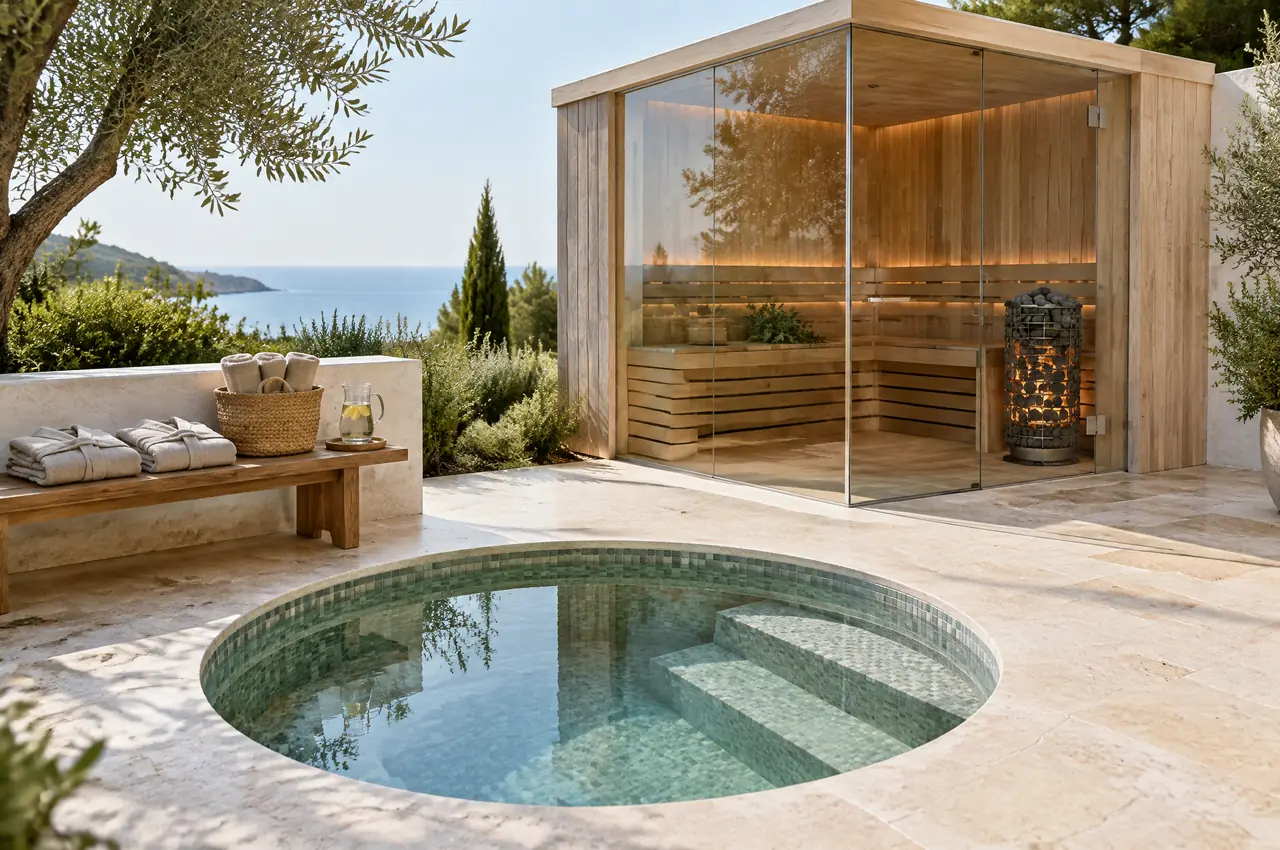
A sauna and plunge circuit for lets
From check-in to changeover: guest flow, covers, the cleaner's routine, registration and the listing.
Read on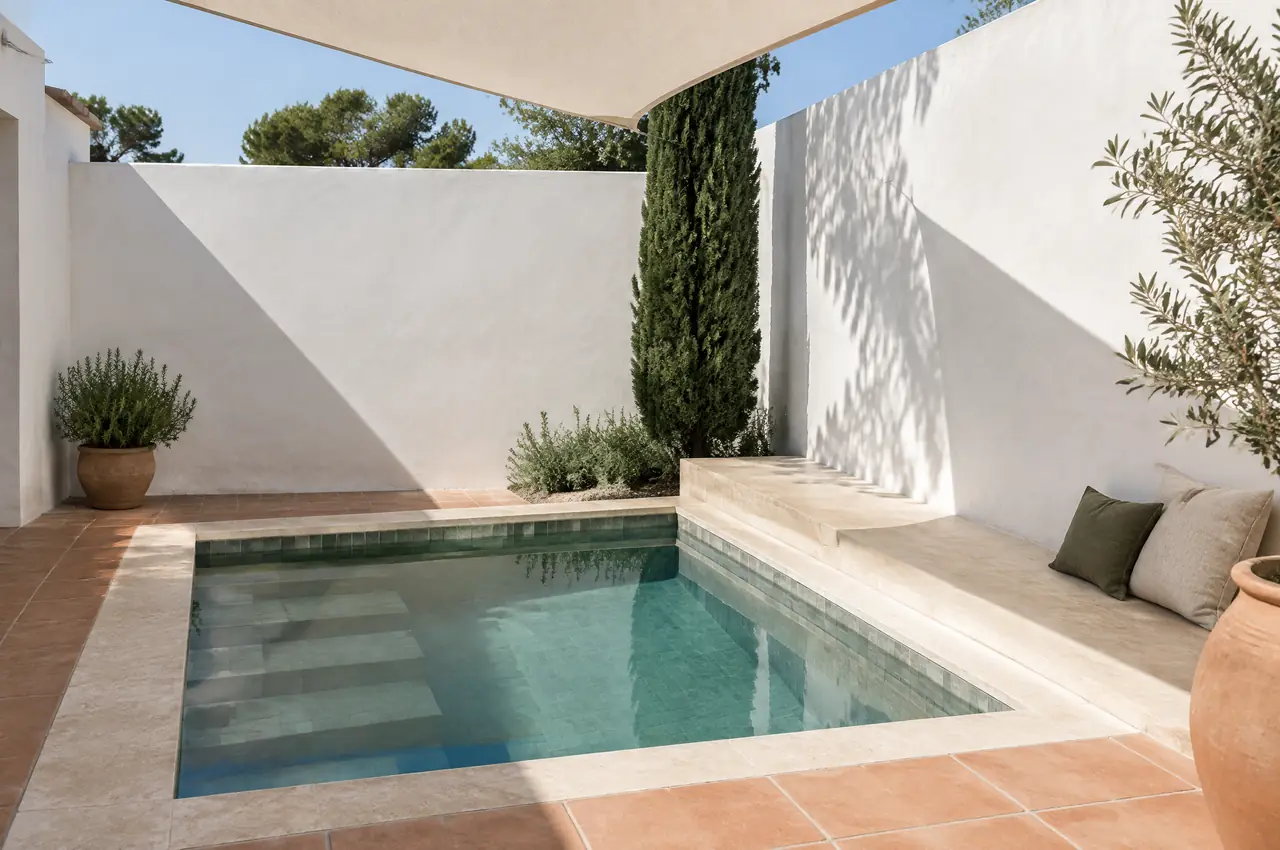
Cold plunge pools in a Mediterranean summer
Four sources of heat, three chiller classes and the shade and cover that matter more than a bigger machine.
Read on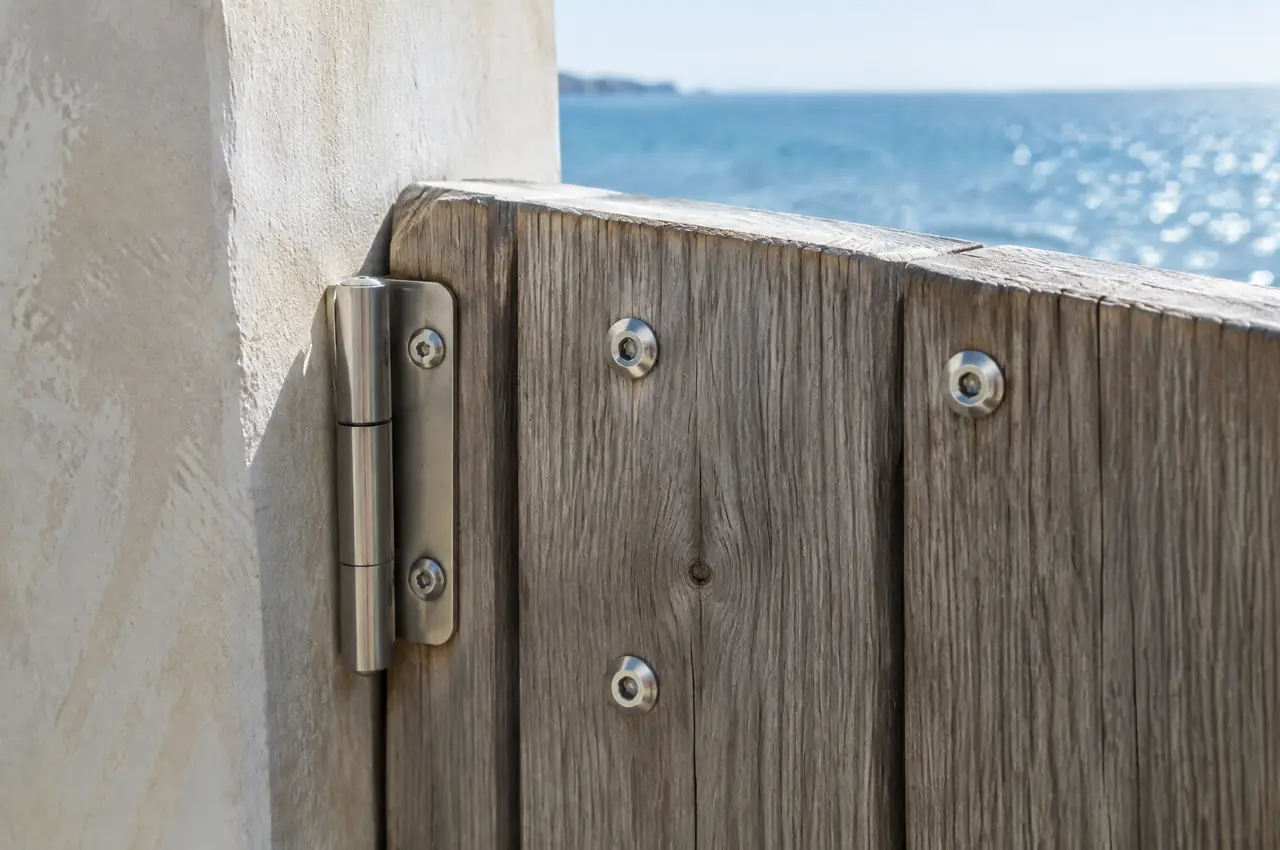
Salt air on timber, glass and steel
Where salt travels, why 316 steel, how timber ages and a yearly checklist for coastal saunas.
Read on