Note · Ireland
From sea swimming to sauna and cold dip: building the routine at home
Irish swimmers do not need to be told about cold water. What a home version adds is a warm place to come back to. This note describes the home version of a habit that began at the slipway: what it needs, what it does not, and what to ask your council.
Sections on this page
- A habit before a product
- How cold the sea around Ireland actually is
- Why the sea is not always there
- The warm half: the cabin
- The deck is the building
- The cold dip: a pool, a tub or an ice bath
- The Atlantic edge: wind on a deck
- A Saturday, in order
- Before you buy the cabin: a short kit list
- Planning, neighbours and the long cable
- Cold-water habits and the equipment they leave behind
- A shared version for a swimming group
In Ireland the cold half of the pair is already there: the sea. The warm half is what is missing: a glass cabin on the deck, a cold dip for days the sea is rough, a hook for every robe and a drain that works in a gale. This note describes the format, and where the planning and the weather decide the details.
A habit before a product
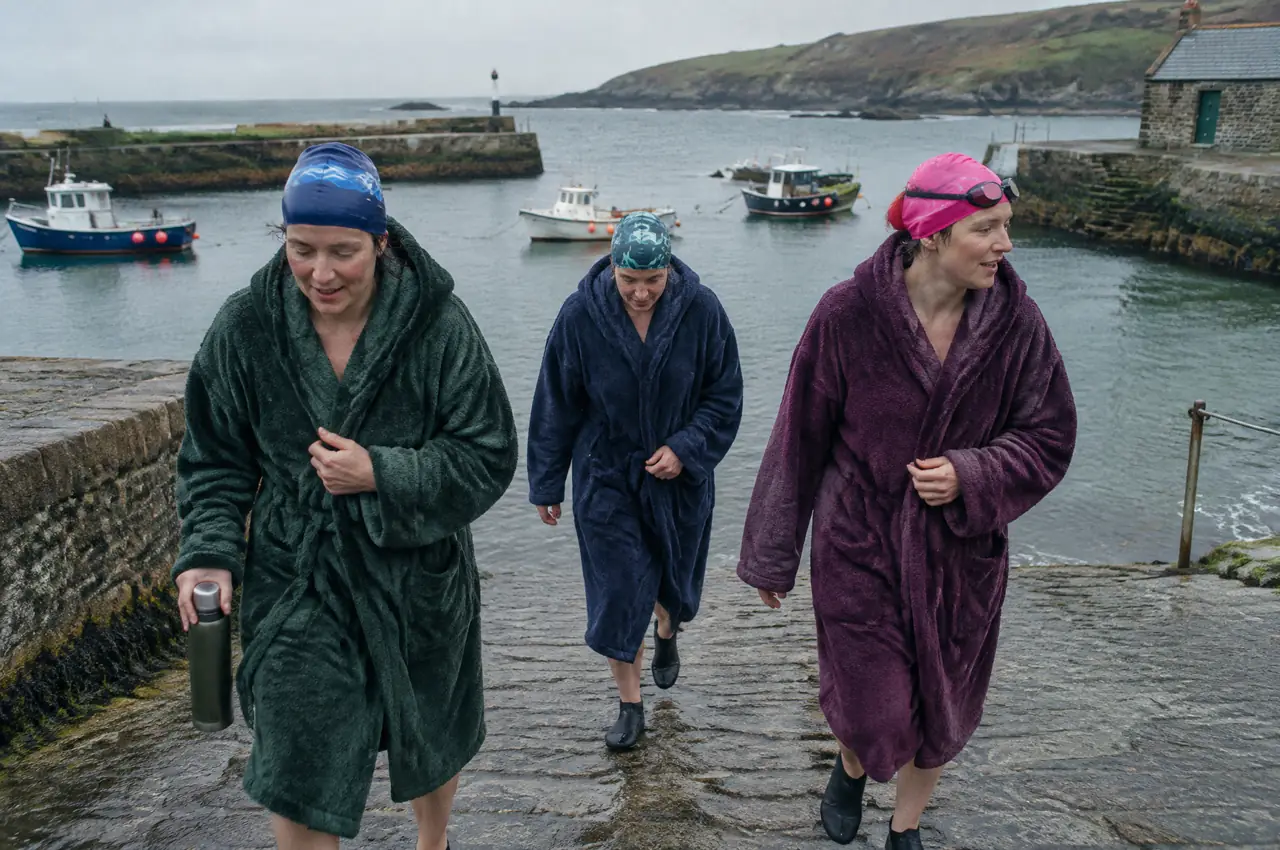
Irish sea swimming is a grassroots habit: groups on slipways, early morning flasks, changing robes in every colour. It does not need an advertisement. The home version is the same habit with the heat and the shower moved indoors, or at least under a roof. “Sauna and cold dip” belongs in one breath, and that is the phrase we use.
How cold the sea around Ireland actually is
The sea around Ireland is cold in every month. Averaging NOAA's daily OISST v2.1 sea-surface analysis for 1991–2020 over one 0.25-degree cell off Dublin Bay gives a coldest month of 7.9 °C (March) and a warmest of 15.1 °C (August); a cell at the mouth of Galway Bay gives 8.5 °C (February) and 16.1 °C (August). These are our own calculations from a public dataset, open-water values: a sheltered bay runs warmer in summer, and a thermometer on your own slipway is the better guide.
| Place | Coldest month | Warmest month |
|---|---|---|
| Dublin Bay | March, 7.9 °C | August, 15.1 °C |
| Mouth of Galway Bay | February, 8.5 °C | August, 16.1 °C |
A plunge pool held at 3–5 °C is colder than the sea at either place in every month of the year. That is one reason the pool complements open-water swimming and does not copy it.
Why the sea is not always there
The sea is not always safe or convenient: storms, tides, darkness at four in the afternoon, a long drive. A plunge pool or an ice bath on the deck is a substitute for the days the sea says no. It is not a replacement for open water: there are no waves and no tides, which is the point and also the limit. How to swim safely in the sea is a question for your swimming group and the people who run your beach, not for us.
The warm half: the cabin
A cabin for four to six seats suits a household and a few friends after a Saturday swim. The glass faces the view or the garden, the benches are in pale ash, and the heater is sized for the volume with a step up for the glass. It takes about forty minutes to reach 90 °C, so a timer is the swimmer's best friend: on at the time you leave for the beach, ready when you return. See glass-front saunas.
The deck is the building
- Gapped boards on adjustable supports, with a stainless drainage channel at the foot of the cabin.
- Robe hooks under cover, one for each person, and a boot tray beside the door.
- A shower, hot enough in January and screened from the lane.
- Low lighting that does not dazzle at six in the evening.
- A roof edge deep enough to keep rain off the door.
The cold dip: a pool, a tub or an ice bath
A built-in plunge pool is flush with the deck, with two steps and a cover. A timber tub sits on a drained base and does the same job at lower cost. A free-standing ice bath is the simplest of all. In a country where the water is already cold, the chiller's job is to hold 4 °C in July and to stop the pool from following the weather in January.
The Atlantic edge: wind on a deck
A deck facing the Atlantic takes its weather from the side. Draw it with that in mind: the cabin's glass turned away from the prevailing wind, a roof edge deep enough to protect the door, fixings and hinges in 316 stainless, a cabin anchored to its base rather than resting on it, and a pool cover that clips down. Ask the question we ask everyone: which way does the wind come from in February, and what does the neighbour's gable do to it? A sheltered corner of the plot is worth more than any detail of the cabin.
A Saturday, in order
- 08:30. The household leaves for the slipway with robes and a flask. The cabin goes on, on its timer.
- 09:15. Back on the deck, wet robes on their hooks, a hot shower.
- 09:30. The cabin is at 90 °C. Four people sit for fifteen minutes on two levels of benches.
- 09:50. A cold dip, if anyone wants one, in the pool or the tub; then rest in a dry robe with tea.
Nothing about it needs a new regime. It needs the cabin to be hot when you are cold, which is a timer.
Before you buy the cabin: a short kit list
- One robe hook for every regular swimmer, in a row, under cover.
- A boot tray and a mat that can be hosed.
- A thermometer and a hygrometer on the cabin wall that you can read in the dark.
- A bench at the door for putting on socks.
- A bin with a lid for wet towels, so the laundry has a place to start.
Planning, neighbours and the long cable
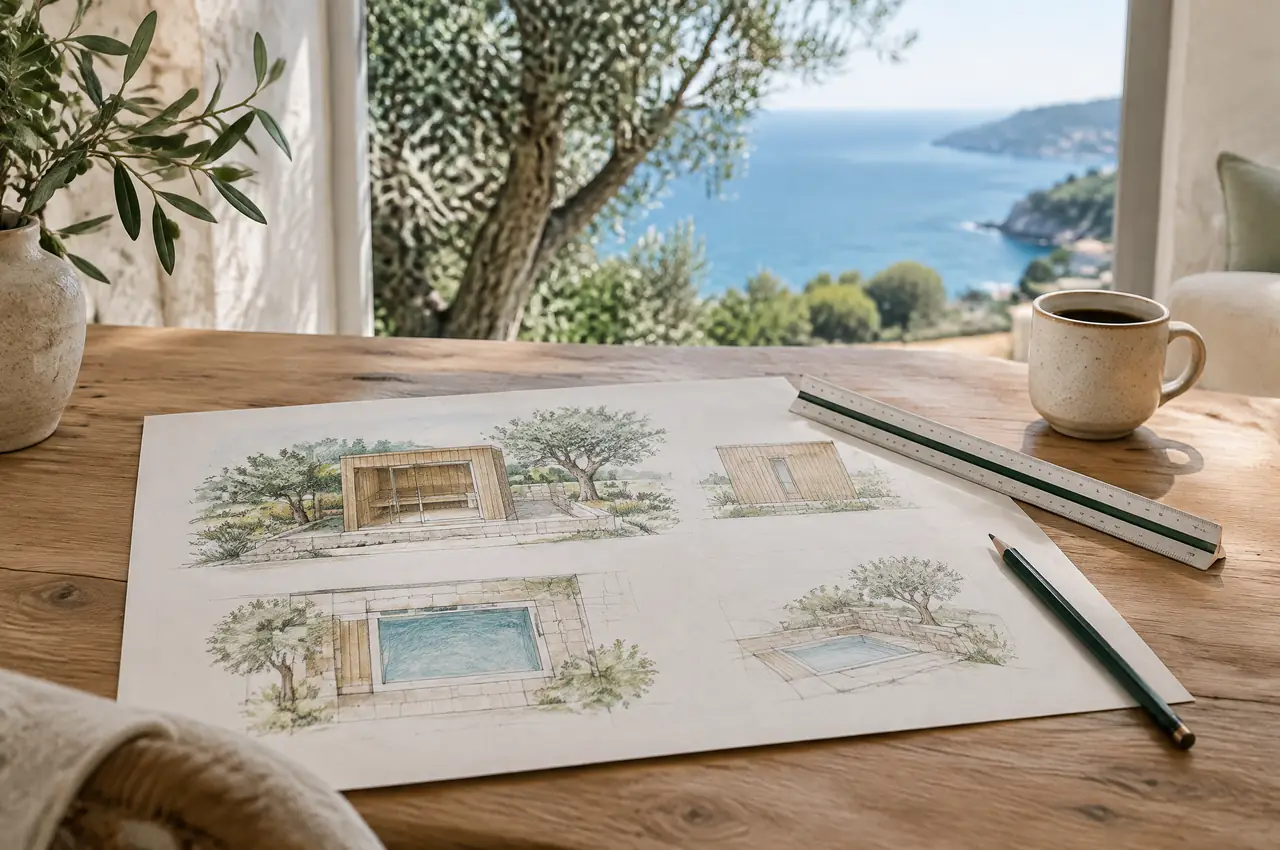
Whether a garden cabin needs planning permission depends on the structure and the plot, and some small garden structures are exempt: see permits compared for what we could verify and what to ask the local authority. A long cable run from the board to the deck needs sizing for the distance. And a compressor is heard on a still night, so neighbours deserve a word before the order.
Cold-water habits and the equipment they leave behind
Irish swimmers come with their own kit: a hooded changing robe, a flask, neoprene boots, a woolly hat. A good deck has places for all of it. Hooks at shoulder height, a bench with a rack under it for boots, a tap for rinsing sandy feet, and a bin for the day's towels. The brief, in a phrase, is a deck that feels like the slipway, with a roof.
A shared version for a swimming group
Some groups would like a cabin of their own beside the slipway. That is a different brief from a home: a shared pool or a shared cabin raises hygiene, supervision and insurance questions, and the planning route is different. See commercial and hygiene for commercial plunge pools.
Is a sauna worth having if I already swim in the sea?
That is for you to say. What we offer is heat within five steps of cold water, built to be used in a storm.
Can I use the plunge pool instead of the sea?
On rough days, yes. It does not replace open-water swimming, which has its own risks and skills.
How long does the cabin take to heat?
About forty minutes, so put it on a timer.
Further notes
Notes that continue this one
Outdoor sauna permits, country by country
What we could verify on official sources in four countries, and the five questions to put to any town hall.
Read on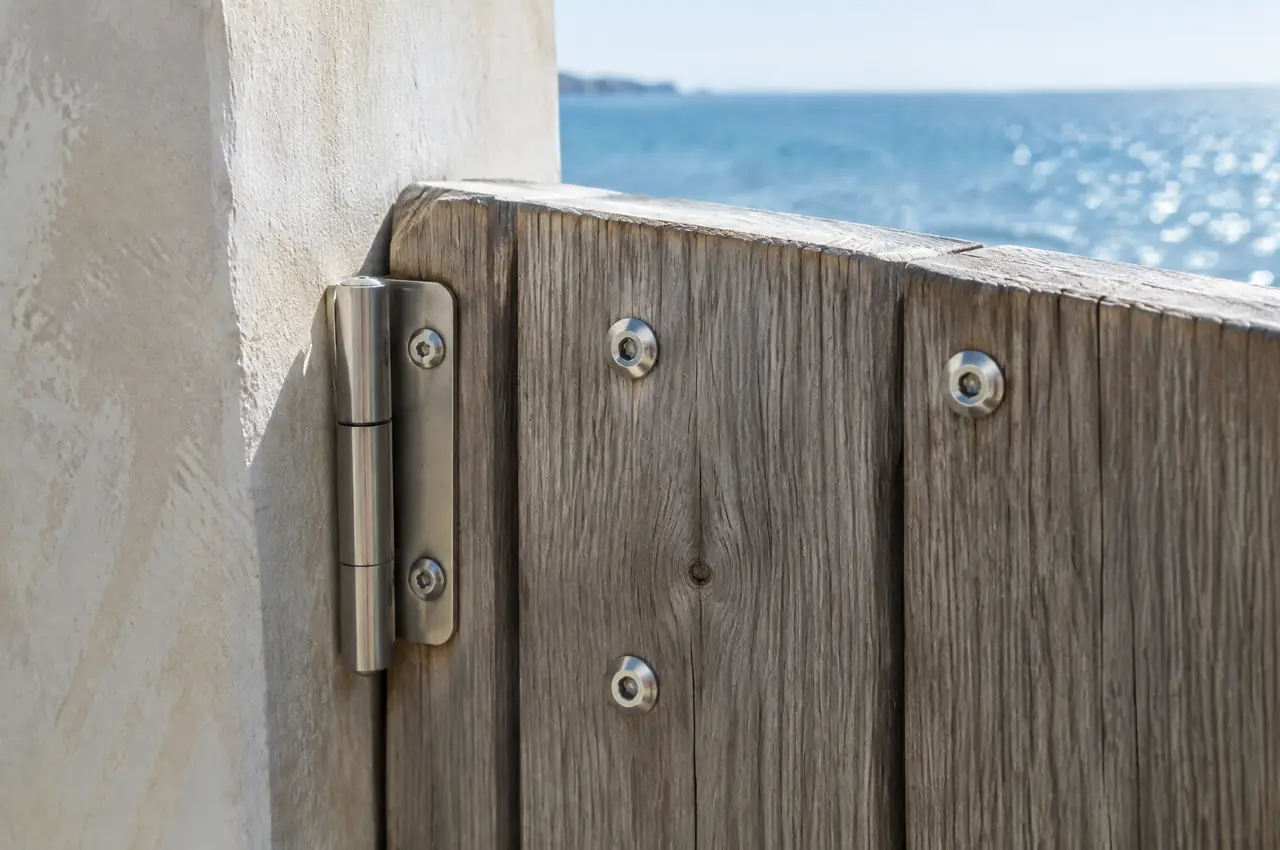
Salt air on timber, glass and steel
Where salt travels, why 316 steel, how timber ages and a yearly checklist for coastal saunas.
Read on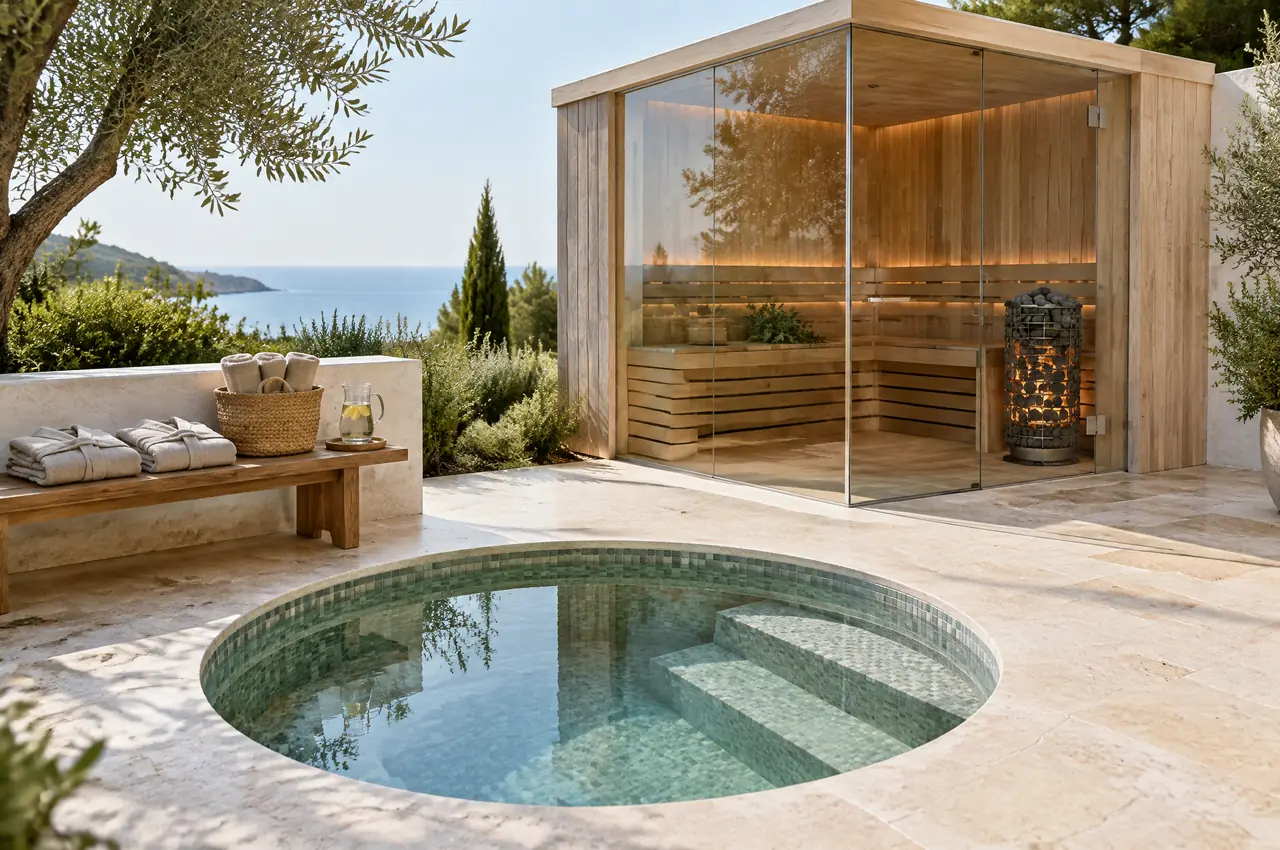
A sauna and plunge circuit for lets
From check-in to changeover: guest flow, covers, the cleaner's routine, registration and the listing.
Read on