Dublin · Wicklow · IE
A sauna and cold plunge pool in Dublin and Wicklow, at the end of the long garden
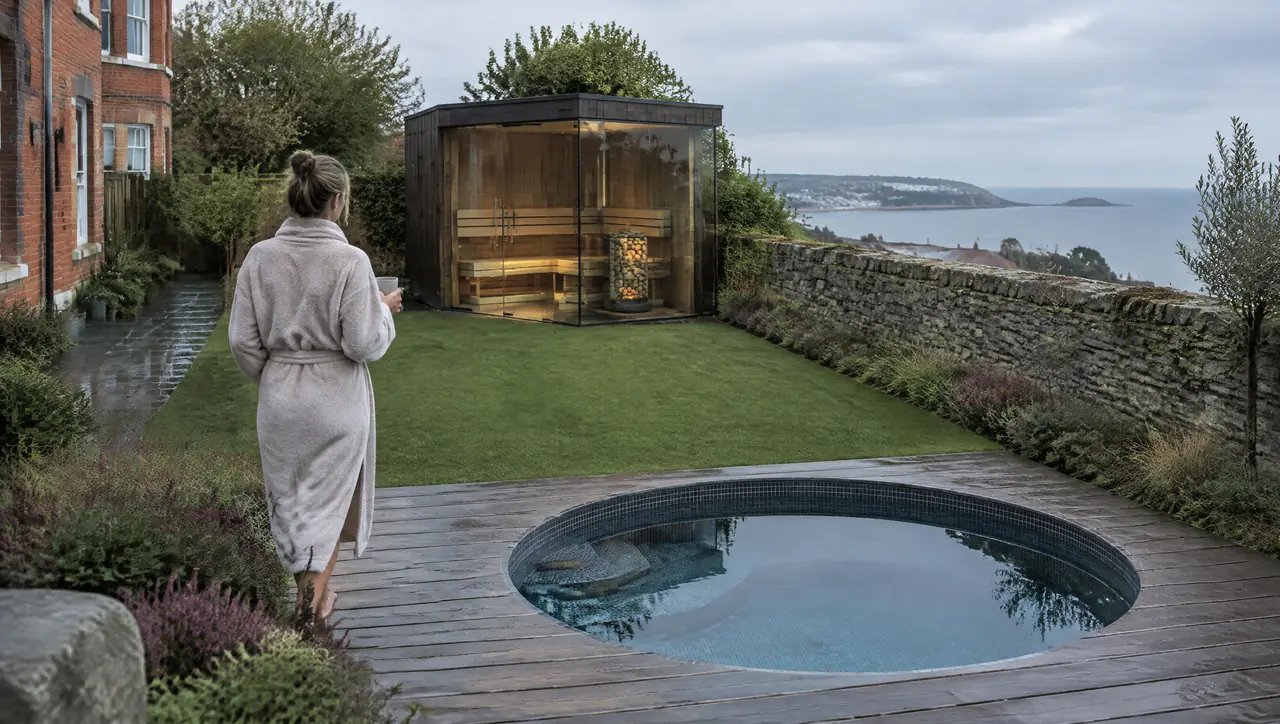
Victorian red-brick houses in Dalkey, Killiney and Blackrock have long, narrow gardens, and some of the people who live in them swim in the bay all year. A glass cabin and a plunge pool at the far end of that garden suit that routine.
Sections on this page
- The long garden and the short list of options
- Dublin Bay and the people who already swim in it
- Protected structures and conservation areas
- Wicklow: pines, hills and long lanes
- Apartments, roofs and management companies
- City gyms, clinics and hotels
- A sample for a Dalkey garden
- Four small errors in a Dublin garden
- Dublin's south side through the seasons
The long garden and the short list of options
A terraced Victorian house in south Dublin has a garden that is long and narrow, with walls on three sides and neighbours beyond. The usual choice is a cabin at the far end, with its glass facing back towards the house, a deck around it and a plunge pool or an ice bath beside the door. Height and distance from the boundary are the questions that count, because a cabin that rises above the wall is visible to everyone. We draw it to the lowest roofline that works and put the glass where nobody overlooks it.
Dublin Bay and the people who already swim in it
The swimmers of Sandycove, Dalkey and the Bull Wall need no persuading that cold water is a pleasure. What a home version adds is warmth afterwards, a place for wet robes and a routine that does not involve a car park. A cabin of four to six seats on the deck, a plunge pool for the days the sea is rough and a shower is the answer. See from sea swimming to sauna and cold dip.
Met Éireann's 1991–2020 averages for Dublin Airport: 772.5 mm of rain a year, a July mean daily maximum of 19.5 °C and a January mean daily minimum of 2.3 °C. The water is cold and the air is mild: the chiller's job is to keep a pool at 4 °C in July, not to fight a heatwave.
Protected structures and conservation areas
Many Dublin houses are protected structures or lie in architectural conservation areas, which brings extra questions about anything built in the curtilage: ask your local authority whether the house is on its record of protected structures or in a conservation area, and what that means for a cabin and a pool at the end of the garden. We draw the least visible, lowest layout and can show it on the house's plans for the conversation.
Wicklow: pines, hills and long lanes
South of the city, the Wicklow hills hold farmhouses, country homes and hotels with grounds. Plots are larger and the weather is wetter and windier. A cabin among Scots pines is a pleasure and a maintenance question: needles on the roof, resin on the glass, and wind through the gaps. We specify a membrane roof with a generous overhang, a screen where the wind is strongest and a base that drains. The lane to the house is often narrow, so we ask about the crates' route first.
Apartments, roofs and management companies
Docklands and suburban apartment schemes are run by owners' management companies. A roof terrace or amenity deck with a cabin and two plunge pools needs the company's agreement, the developer's engineer's note and a plan for the cold pool's hygiene and rota. See developers and architects.
City gyms, clinics and hotels
Boutique gyms and clinics in the city are the commercial case for a recovery room, and its small hotels have courtyards. Sizes are modest: ten to twenty square metres, a drain and a three-phase supply. See gyms and studios and boutique hotels.
A sample for a Dalkey garden
Four small errors in a Dublin garden
- A cabin that rises above the wall. The neighbours see it, and so does the planning authority.
- Forgetting the shower. After a bay swim, rinsing off sand and salt is part of the routine; a hose and a drain are not enough in winter.
- A deck with no gaps. Rain stays, algae follows, and the deck becomes a skating rink.
- Cables through a protected structure. Ask the local authority before you drill through anything old.
Dublin's south side through the seasons
November to March is the high season for the cabin: dark evenings, wet gardens, bay swimmers who come in cold. April to June is the best time for the plunge pool: long days and kind weather. July and August belong to the plunge pool and the sea at its warmest. September is the second wind, and the sauna gets switched back on.
The Dalkey sample is a four-seat cabin and a round pool from the price list; the kit builder shows the range with a different pool.
How tall can a garden cabin be?
That depends on your council and on the plot. Ask the local authority about height and distance from boundaries; we draw to the answer.
Can a cabin go in a house that is a protected structure?
Sometimes, with the right drawings and a conversation with the local authority. We help with the drawings.
Do you build in Wicklow?
Yes: country houses and hotels with grounds, with attention to wind, rain and the road in.
Other coasts
The same drawing under a different sky
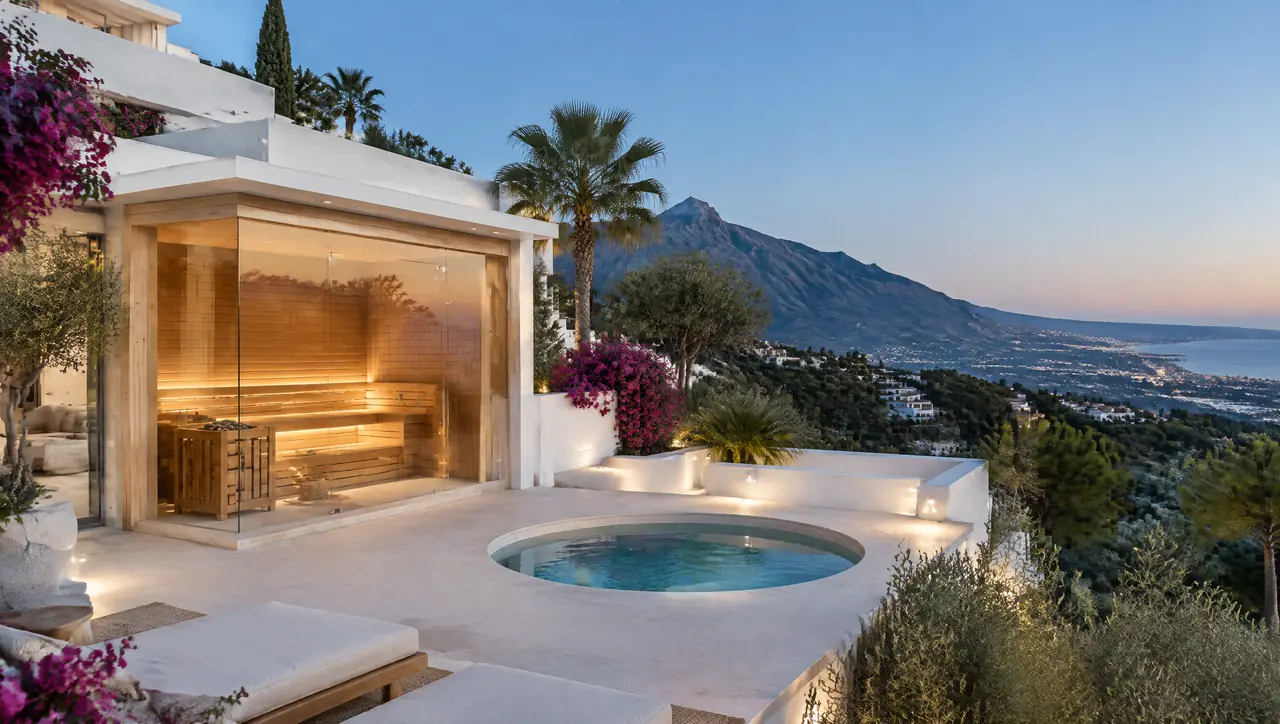
Marbella and the Costa del Sol
Villas, estates, hotels and padel clubs: a pool that stays cold when the terral blows.
Read on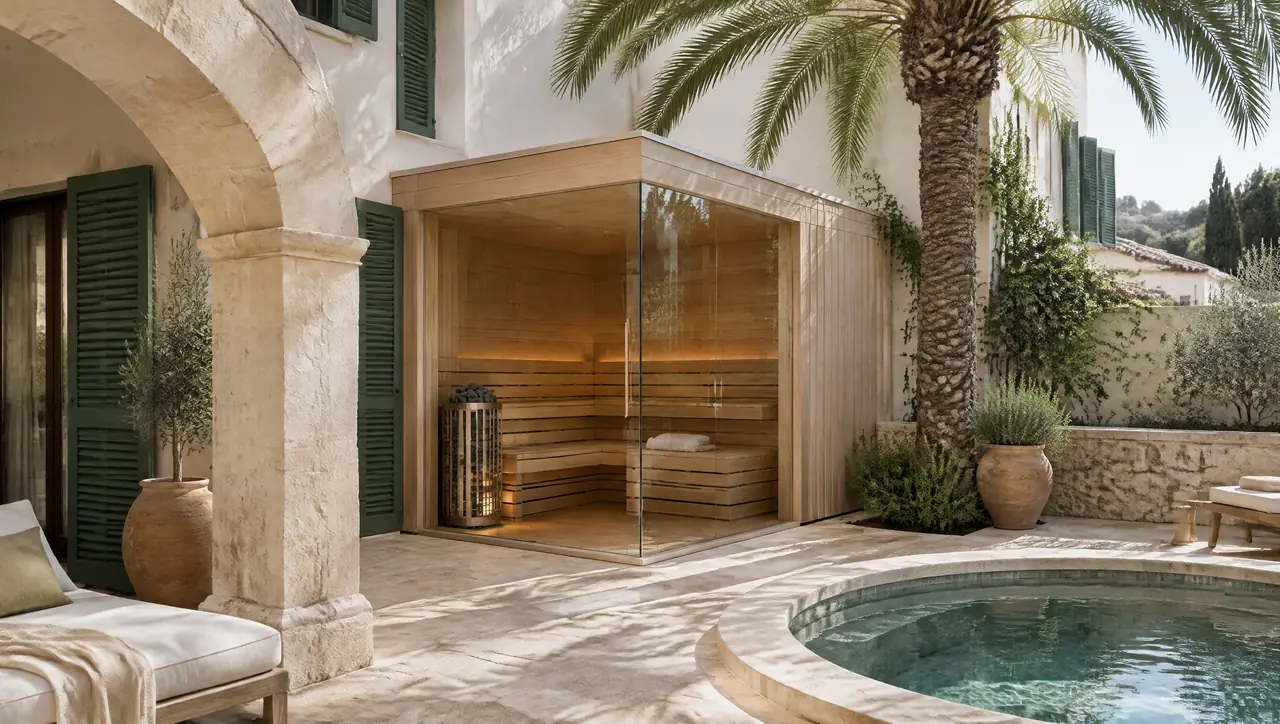
Mallorca
Fincas, Palma patios and hotels: stone, olive terraces, island freight and a plant that respects the water.
Read on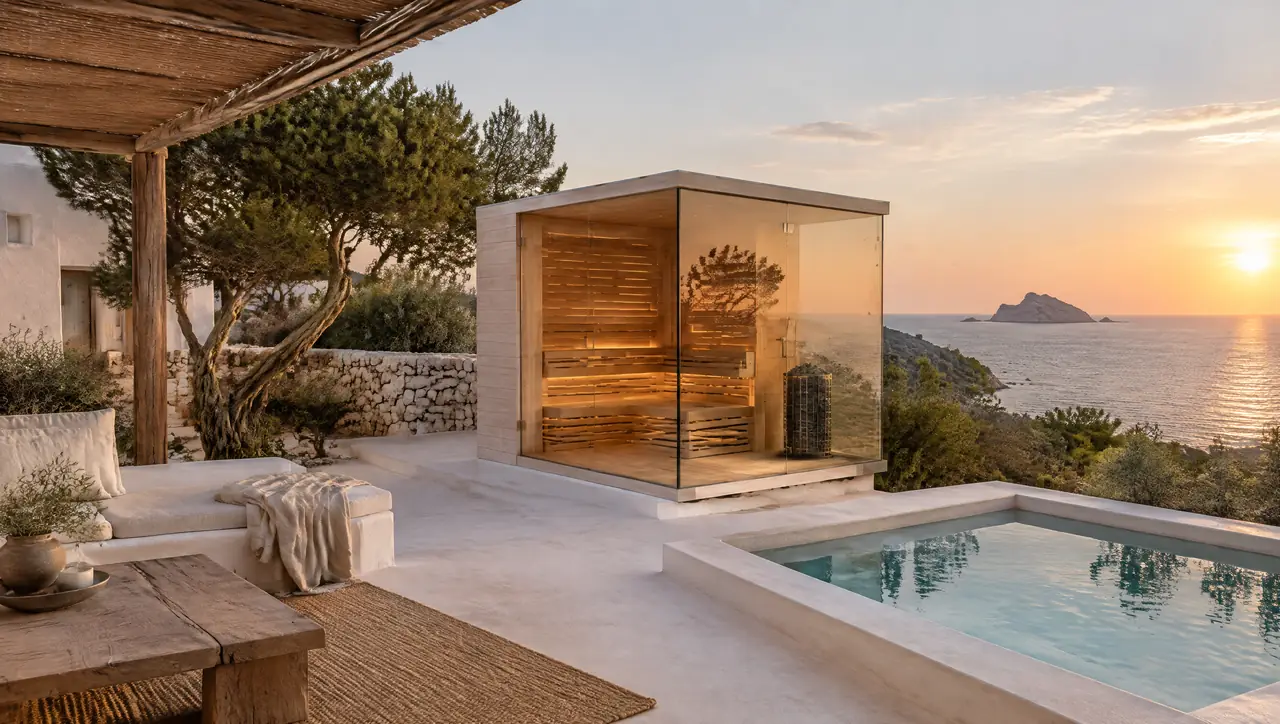
Ibiza and Menorca
Cubic villas, agroturismos and boutique hotels: islands that love a plunge pool and regulate what you build.
Read on