Note · Choosing
Finnish or infrared for a villa: what actually differs
Both are called a sauna in a search box, and they are different machines. One heats the air and the stones, the other heats you. This note sets them side by side without health claims and says which one fits which villa.
Sections on this page
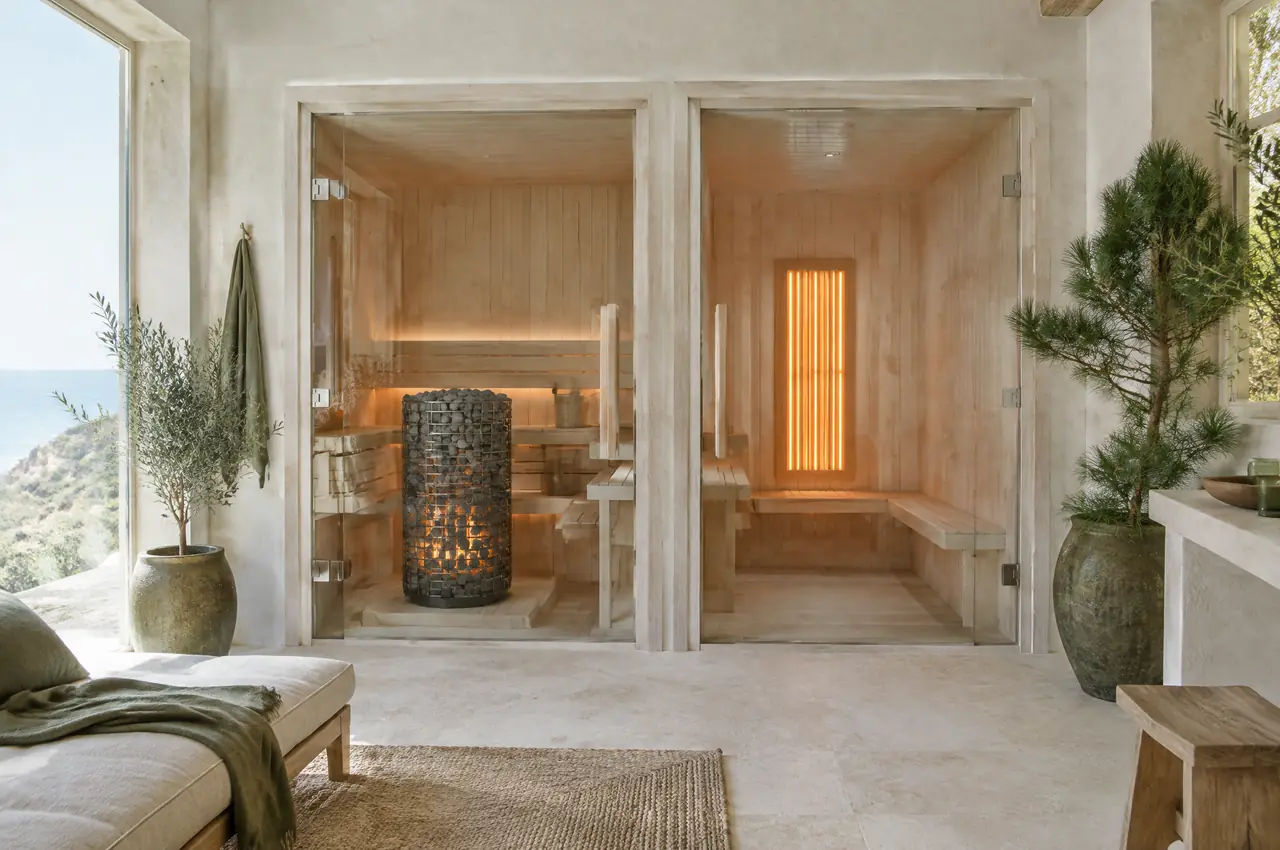
A Finnish sauna is a hot room with a stone heater: the air reaches 90–110 °C, and you can throw water on the stones for a burst of steam. An infrared cabin warms the body with panels while the air stays much cooler. Different feel, different power, different ritual. We build the first as our standard and can fit infrared panels in a cabin when a client asks.
Two ways of making you warm
The Finnish sauna heats the air. A heater, rated by the volume of the cabin, warms a basket of stones; the stones and the air warm you, and the steam from a ladle of water adds humidity for a minute. The infrared cabin heats you directly: panels on the walls radiate, and the cabin air does not need to be hot for you to feel warm. That is why infrared cabins are usually advertised at lower air temperatures and shorter heat-up times, and why they feel so different.
Side by side
| Finnish (heater and stones) | Infrared (panels) | |
|---|---|---|
| Cabin air | 90–110 °C | much lower; ask the maker for the figure |
| Heat-up | about 40 minutes | typically much shorter |
| Humidity | dry, with steam on demand from the stones | dry; no stones, no steam |
| Power | heater by cabin volume, 3.5 to 18 kW in our range | panel ratings in watts; the total is on the data plate |
| The ritual | the ladle, the steam, the shared bench | quiet, individual, often short |
| Large cabins | common; our largest seats twelve | possible but unusual |
| What you check | stones, element, ventilation | panel condition, wiring |
Why infrared comes up in warm countries
When the terrace is already 30 °C in the evening, a cabin at 100 °C is a big step. Infrared feels milder, starts quickly and draws less power, which suits a villa that is used for twenty minutes at a time. It also suits an apartment where a full heater is awkward. We say so plainly, because the choice is a real one: if infrared is what you want, ask.
When infrared is the right answer
- A small cabin in a flat or a bedroom suite, used by one or two people for short sessions.
- A household that dislikes high air temperatures but likes the idea of heat.
- A villa where a quick start matters more than the ritual.
When it is not
- A hotel, club or holiday let that markets a sauna: the Finnish cabin, with a ladle and steam, is what the word describes, and a glass-front cabin is how it looks.
- A cabin of six or more seats, where the social bench is the point.
- Anywhere you want a hot-and-cold circuit with a proper contrast: the difference between hot air and cold water is bigger.
Three questions to decide
- How many people, and how often? One or two people for twenty minutes: infrared is easy. Four or more, for an hour of company: Finnish.
- What do you want to feel? A deep, even heat in the room and a burst of steam from the ladle: Finnish. A gentler, drier warmth, quickly: infrared.
- What can the supply carry? A 6 kW heater draws about 26 A; a two-person infrared cabin usually draws much less. If the board is tight, infrared is the easier fit.
What we would put in a villa in three places
| Where | Likely choice | Why |
|---|---|---|
| Marbella, a rental villa | Finnish, in a glass cabin | the word sauna in a listing means a heater and stones, and the pair of pools sits beside it |
| Dublin, a terraced house | Finnish, with a heater timer | the household swims in the bay and wants real heat after it |
| Limassol, a tower terrace | either; ask what the board can feed | a small cabin on a shared supply may suit panels better |
Reading an infrared data sheet
Panels are sold as near, mid or far infrared, and the labels describe the wavelength a panel emits. Makers argue about which is best, and we make no claim on the point. What you can compare is on the data plate: rated power in watts, panel area, surface temperature and the number of panels per seat. Divide the rated power by the seats to compare one cabin with another, and ask whether the controller has a timer and an over-temperature cut-out, as a Finnish heater's does.
Running costs, side by side
A Finnish heater draws its rating while it heats the cabin, about forty minutes at full power, and cycles afterwards. A 6 kW heater is about 4 kWh to heat and 3 kWh for an hour of use. An infrared cabin draws the rating of its panels whenever they are on, with a much shorter warm-up. For a twenty-minute session the infrared cabin can use less energy; for an hour with four people the Finnish cabin is the more efficient use of what it heats. The data plate tells you the rating, and we list it in the layout.
What each asks of the room around it
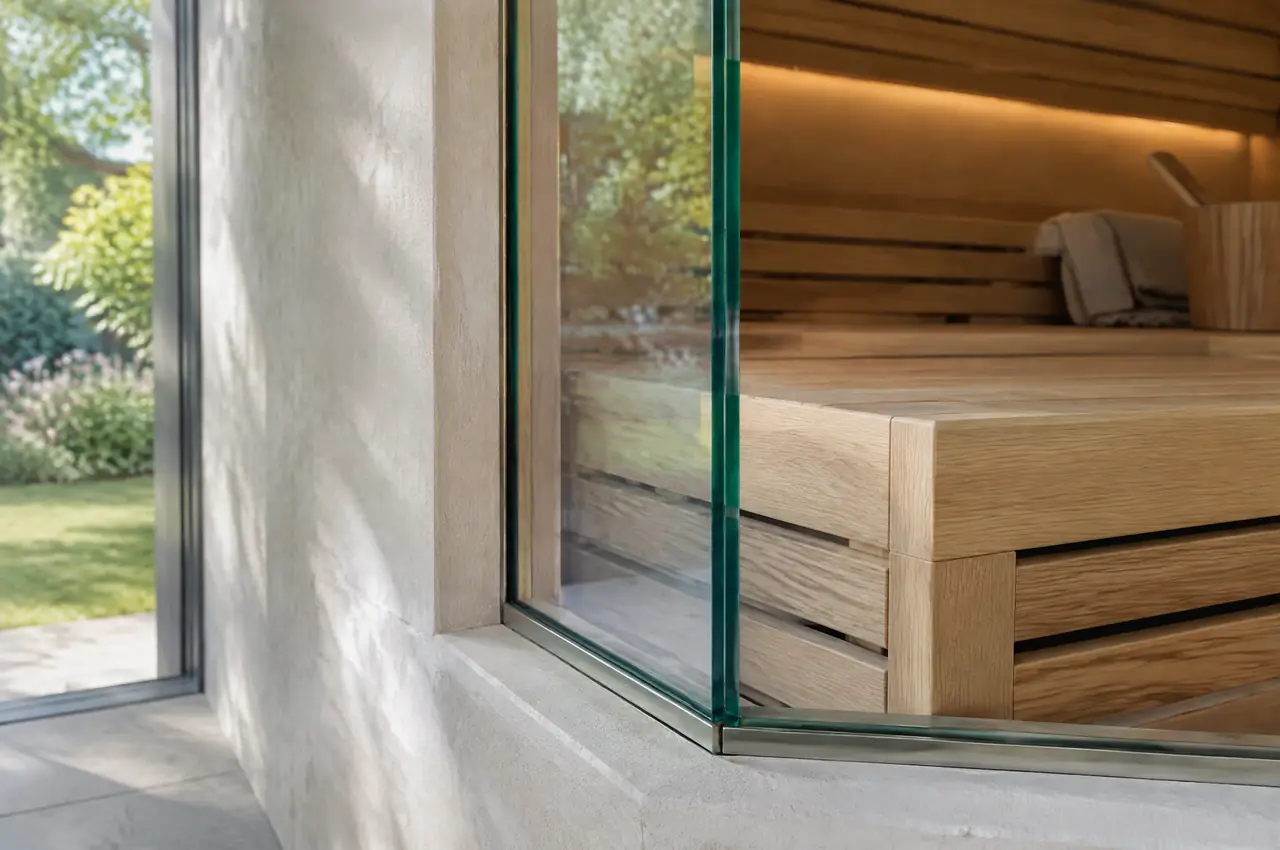
A Finnish cabin asks for air: an inlet near the heater, an outlet on the far side, a floor that tolerates a splash and the clearances around the heater that the maker specifies. An infrared cabin makes quieter demands, with no stones, no steam and no ladle, but its panels are not meant to be covered, and its wiring carries a steady load for as long as they are on. In both, the glass wall is the same glass, and the advice on seals and energy applies equally.
Doing both
A Finnish cabin can take an additional panel on the back wall: use the heater for a full session and the panel for a quick warm-up. It is not a standard line on our price list, so ask for it with the made-to-measure cabin and we will draw it and cost it together.
Neither type is medicine, and nobody should choose one because of the health claims on an advertisement. Choose by what you enjoy and what your room, power supply and rota can support.
Is an infrared cabin really a sauna?
In Finland a sauna is a hot room with a stone heater. In search results and in shops, the word is used for both. They are different products, and it is worth knowing which one you are buying.
Which costs more to run?
It depends on the size and how long you use it. A heater draws its rated kilowatts while it heats the cabin and cycles after that; panels draw their watts while on. We list the loads of both in the layout.
Can I add an infrared panel later?
Often yes, if the wiring and the wall allow it. Tell us when you order the cabin and we plan the wall and the circuit for it.
Further notes
Notes that continue this one
What a wall of glass costs in electricity
What a square metre of sauna glass loses, why heaters step up for it and what a session costs to run.
Read on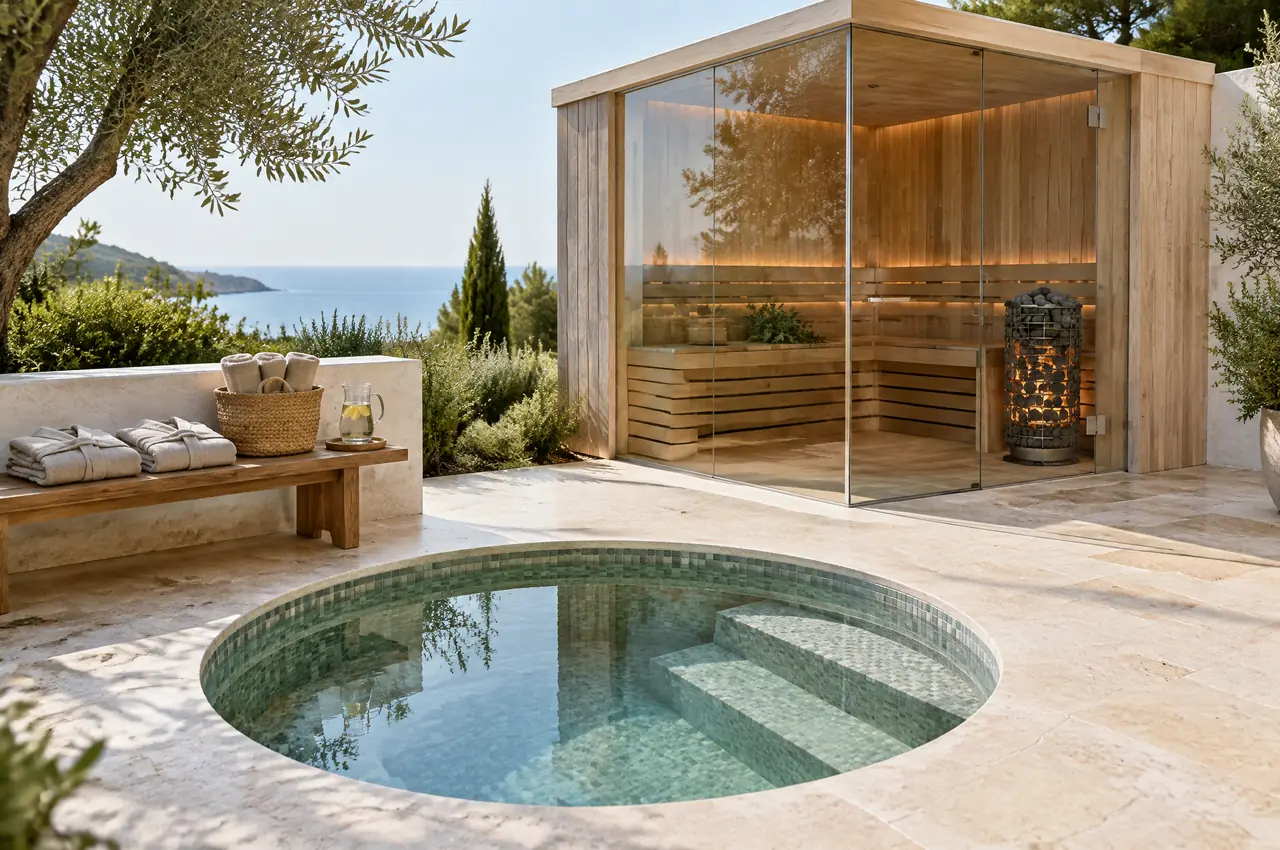
A sauna and plunge circuit for lets
From check-in to changeover: guest flow, covers, the cleaner's routine, registration and the listing.
Read on
Outdoor sauna cost in euros, line by line
Ranges in euros by size, the nine lines of a quote and what changes by country.
Read on