Porto · Douro · PT
A sauna and cold plunge pool in Porto, among granite, tile and Atlantic rain
Walled gardens of camellias, townhouses clad in azulejo, the grey Atlantic at Foz and Matosinhos, and, an hour inland, the vineyards of the Douro in a heat the city never sees. Porto is a city where a sauna suits the weather and a plunge pool is a matter of taste.
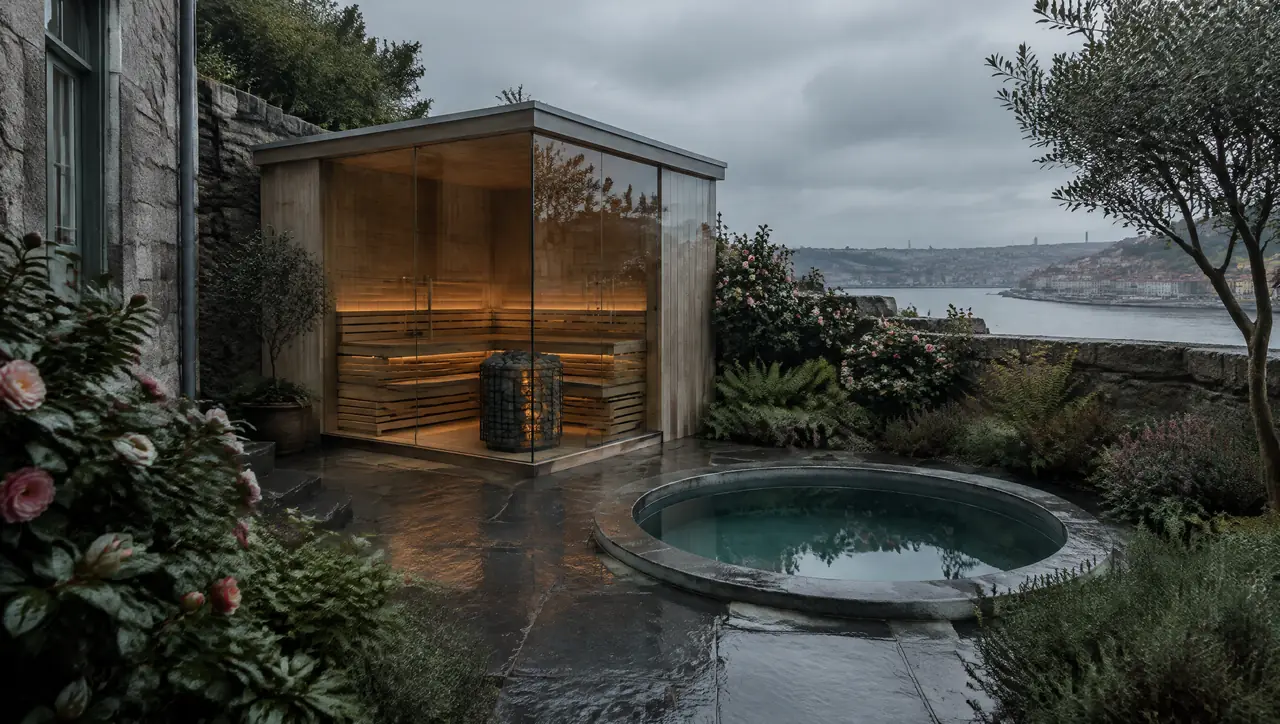
Sections on this page
- A sauna that suits the weather
- Wet ground and a roof that works
- Granite townhouses and the walled garden
- Foz, Matosinhos and the coast
- The Douro: where the vineyard hotel is the client
- A granite townhouse, priced
- Rain is not an exception: four lessons
- A year in a Porto garden
- Foz, the surf coast and the cold-water crowd
- Questions for the câmara in a historic district
A sauna that suits the weather
Porto is cool, wet and grey for much of the year, and a warm cabin at the bottom of the garden is the natural answer. A glass wall lets you watch the rain from inside, and a plunge pool or an ice bath turns a damp afternoon into a ritual. The question is not whether to build one but how to make it last: wet ground, rain from the Atlantic and heritage rules in the city.
Porto, Pedras Rubras (IPMA climate normal 1991–2020): a mean daily maximum of 24.3 °C in July and 24.8 °C in August, a January mean minimum of 6.4 °C and 1,147 mm of rain a year. The north of Portugal is Atlantic: cooler in summer than the Algarve and wetter by a factor of two and a half.
Wet ground and a roof that works
Everything in the north is built to shed water. Our outdoor cabins get a flat roof with a membrane and falls, a deep drip edge, ventilated cladding and a base that drains: a timber deck on supports, a granite terrace on a slab with falls. Timber outside is thermally modified ash, which resists rot and silvers in the rain, and fixings are 316 stainless. The cold pool is the easy half, because the weather is already cool: the chiller's job is holding 4 °C in July.
Granite townhouses and the walled garden
The typical Porto plot is a walled garden behind a granite house, with camellias, a lemon tree and a stone bench. A glass cabin of four seats and a round plunge pool fit in a garden of about 6 × 6 m; the granite wall is private and holds the cold. Historic districts and listed buildings add heritage questions about what is visible from the street and from neighbours' windows, and the câmara decides.
Foz, Matosinhos and the coast
On the seaside the salt arrives and the wind with it. 316 stainless everywhere, glass turned away from the prevailing wind, covers that can be lifted by one person and a quick rinse after storms. Sea swimmers live along this coast; a sauna and a cold plunge beside the house is a natural extension. From sea swimming to sauna and cold dip describes the format.
The Douro: where the vineyard hotel is the client
Inland, the Douro valley is hot and steep, with terraced vineyards and quintas converted to small hotels. Summers can be fierce in the valley bottom, so the cold pool there is a necessity and the chiller needs shade and a good air path. A glass cabin turned to the river is the signature image of the place. Access is the challenge: narrow roads, tight bends and hillside plots. We ask about the road before anything else.
A granite townhouse, priced
Rain is not an exception: four lessons
- Treating rain as an exception. It is the climate. Roof falls, drip edges and a drained base are the brief, not options.
- Damp timber with no air behind it. Cladding without a ventilated gap rots from the inside.
- Forgetting the valley's heat. A quinta in the Douro bottom is far hotter than the coast. Size the chiller for the valley, not for Foz.
- A road that is a hairpin. Hillside quintas have bends a lorry cannot take. Ask about the road first.
A year in a Porto garden
Autumn and winter are the sauna seasons, in rain and wind, with a glass wall to watch it through. Spring brings the first plunges and a lot of bright, unsettled weather. Summer is mild by the sea and hot in the valleys, and the cold pool is for the afternoons. The cabin is the one object that is used in all four.
Foz, the surf coast and the cold-water crowd
North of the river mouth, the coast from Foz to Matosinhos and beyond has surfers and open-water swimmers who are used to cold water. A cabin and a plunge pool at the end of the garden are a natural extension of a routine that already ends on the beach. See from sea swimming to sauna and cold dip for the format, written for Ireland and at home in Porto.
Questions for the câmara in a historic district
- Is the house in a protected zone, and which authority decides what is visible from the street?
- Is a free-standing cabin treated as an annex or as a new building?
- What documents does the council want: drawings, a structural note, the neighbours' consent?
- Is there a rule about roof materials, colours or heights for new structures?
The granite-townhouse sample is two lines of the price list; the kit builder lets you try an ice bath instead of a pool.
Does a sauna work in a wet climate?
Yes. The cabin is a closed, insulated hot room, so what the weather changes is the building: it must be ventilated and the base dry, and then the rain stops mattering.
Can I build in a historic district?
Often, but the câmara and sometimes a heritage authority decide. We draw the least visible layout.
Do you build for Douro hotels?
Yes: glass cabins with river views, cold pools and plant rooms sized to the rota. See boutique hotels.
Other coasts
The same drawing under a different sky
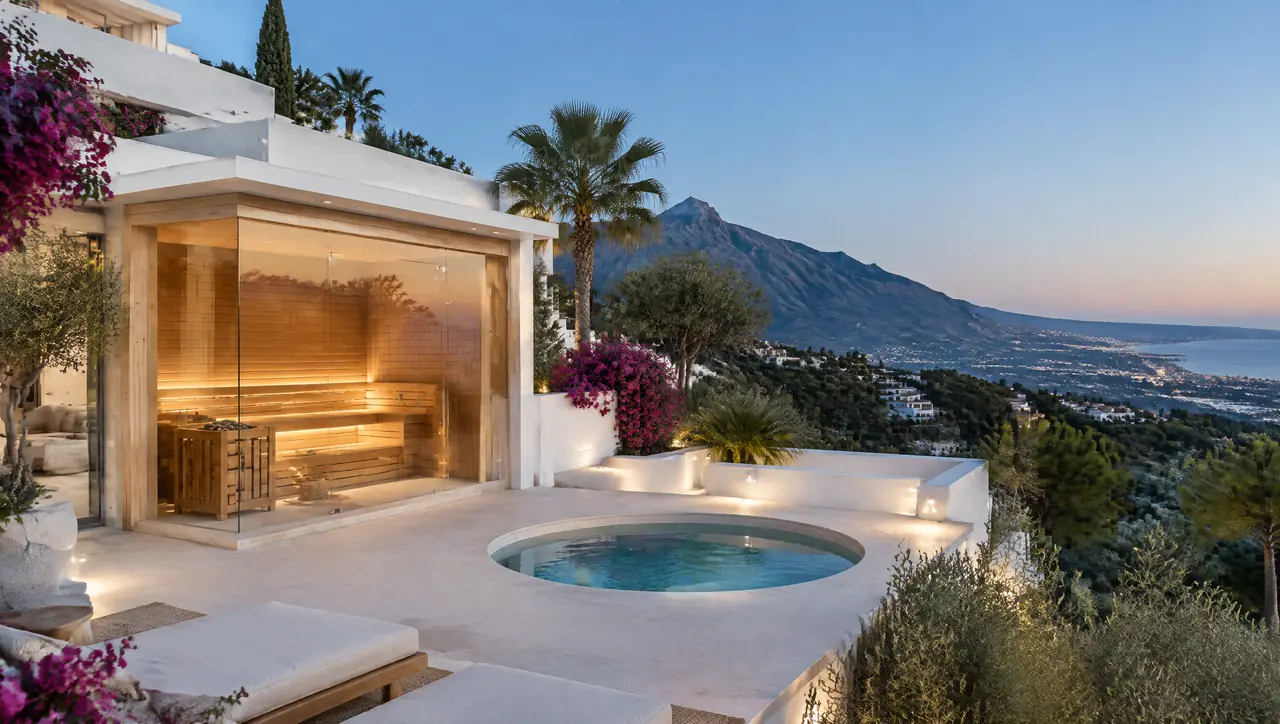
Marbella and the Costa del Sol
Villas, estates, hotels and padel clubs: a pool that stays cold when the terral blows.
Read on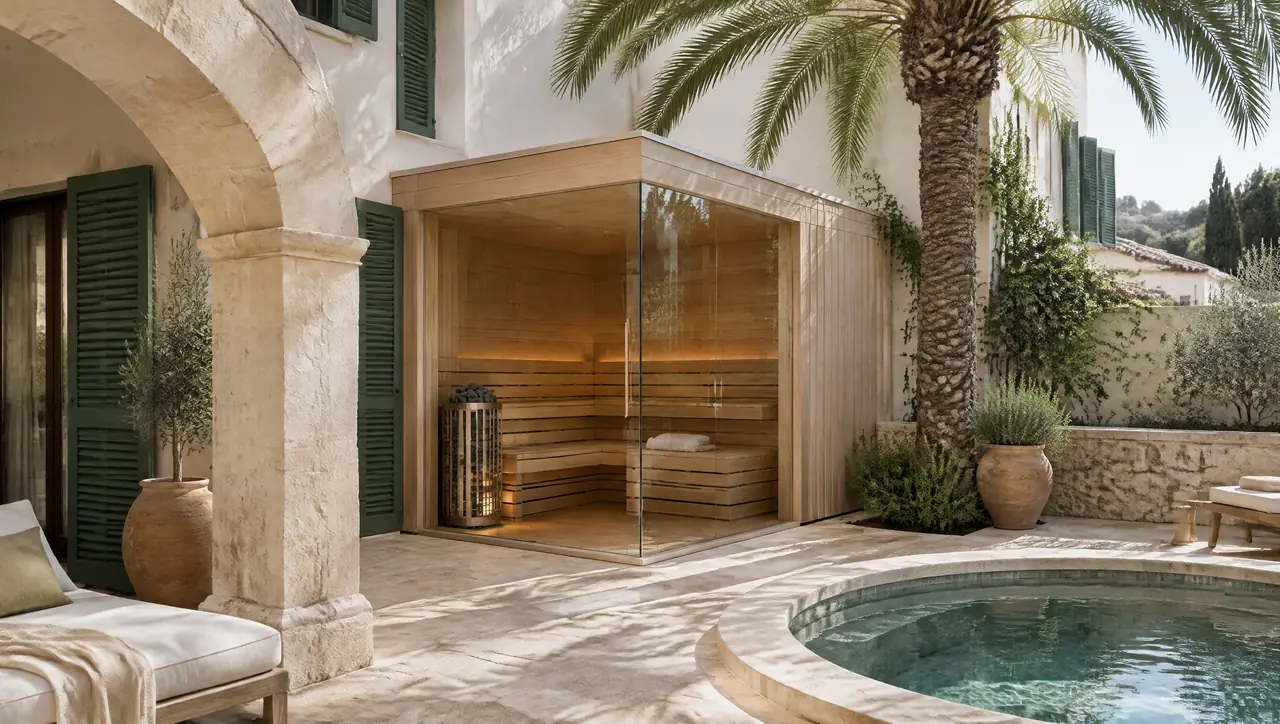
Mallorca
Fincas, Palma patios and hotels: stone, olive terraces, island freight and a plant that respects the water.
Read on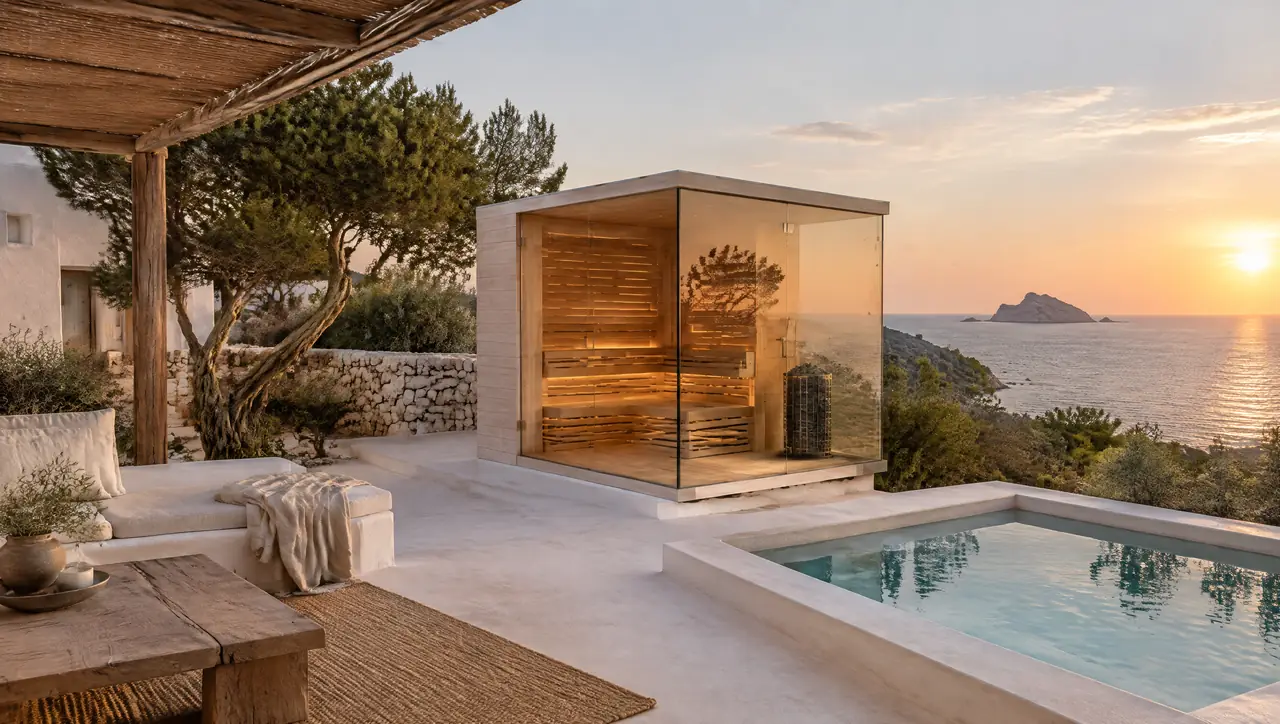
Ibiza and Menorca
Cubic villas, agroturismos and boutique hotels: islands that love a plunge pool and regulate what you build.
Read on